
Black Chokecherry
Black Chokecherry
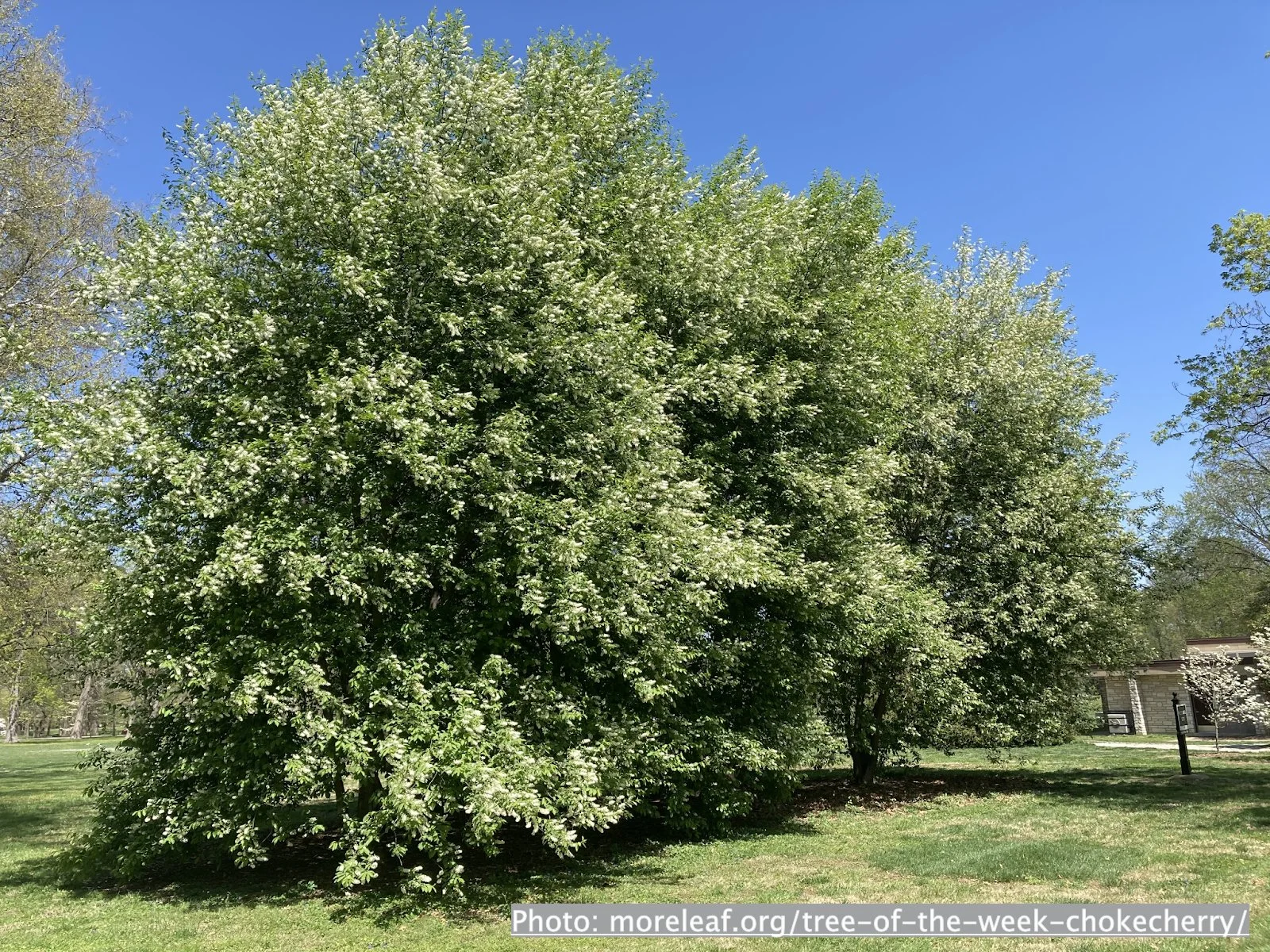
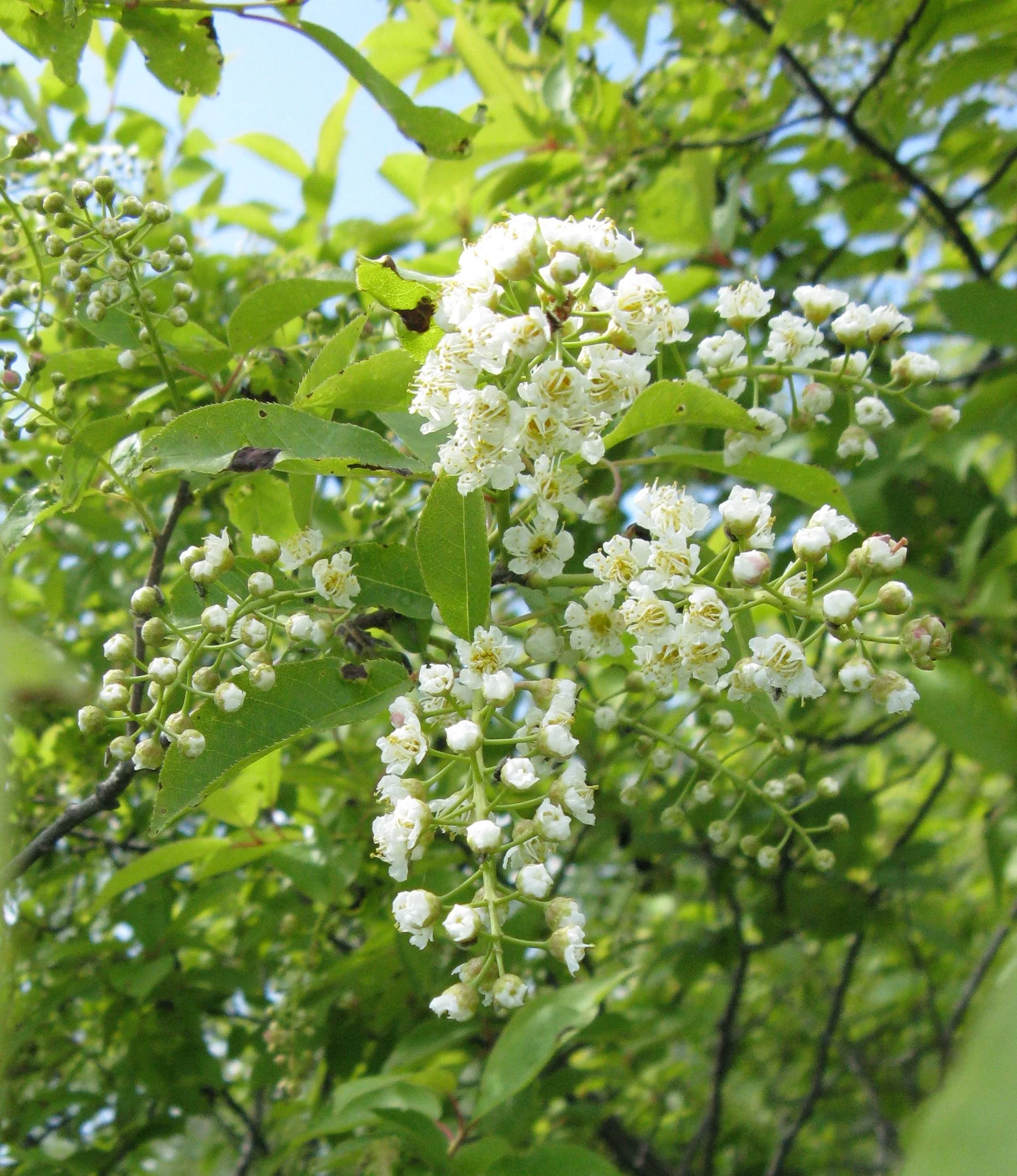
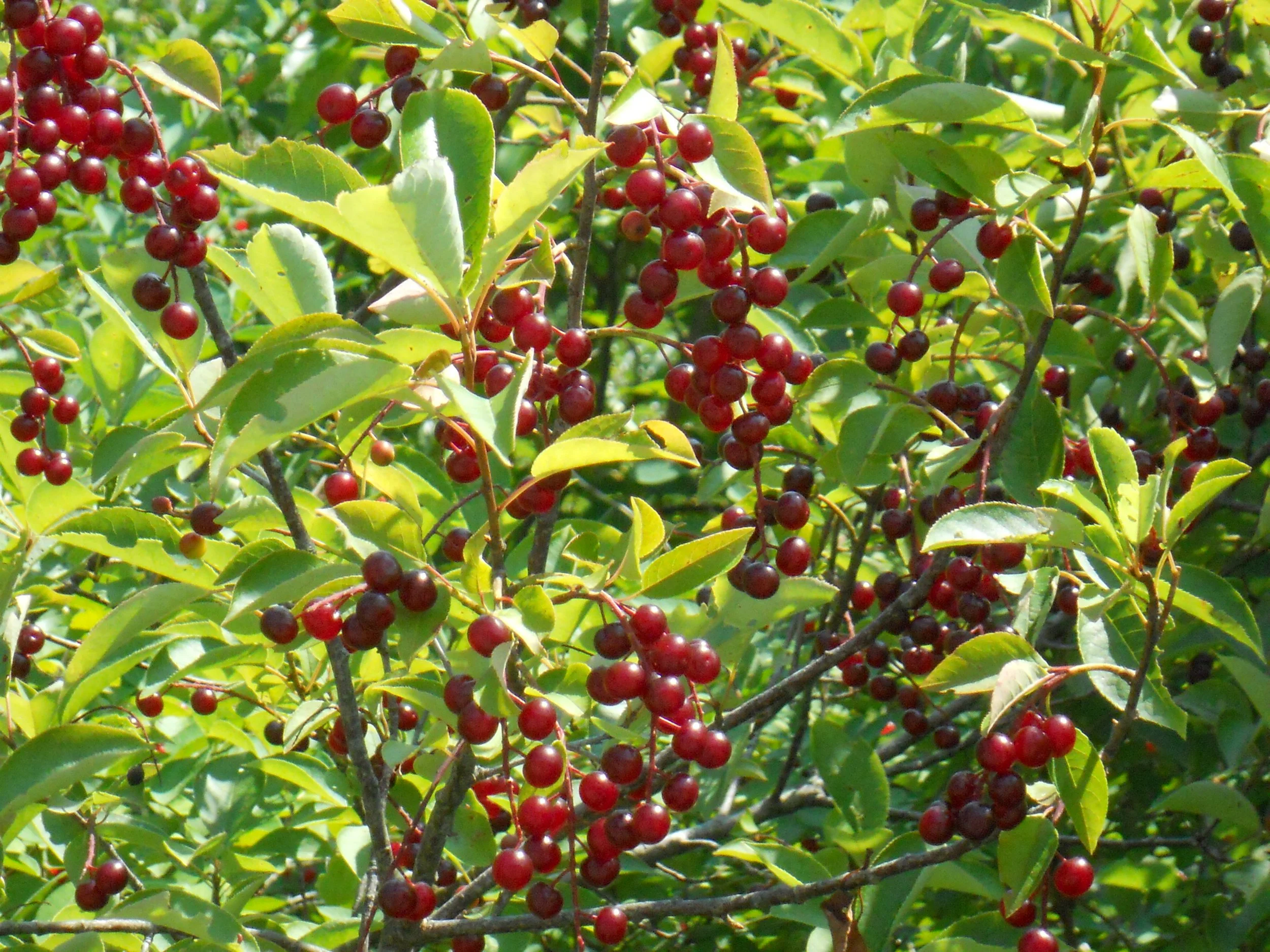
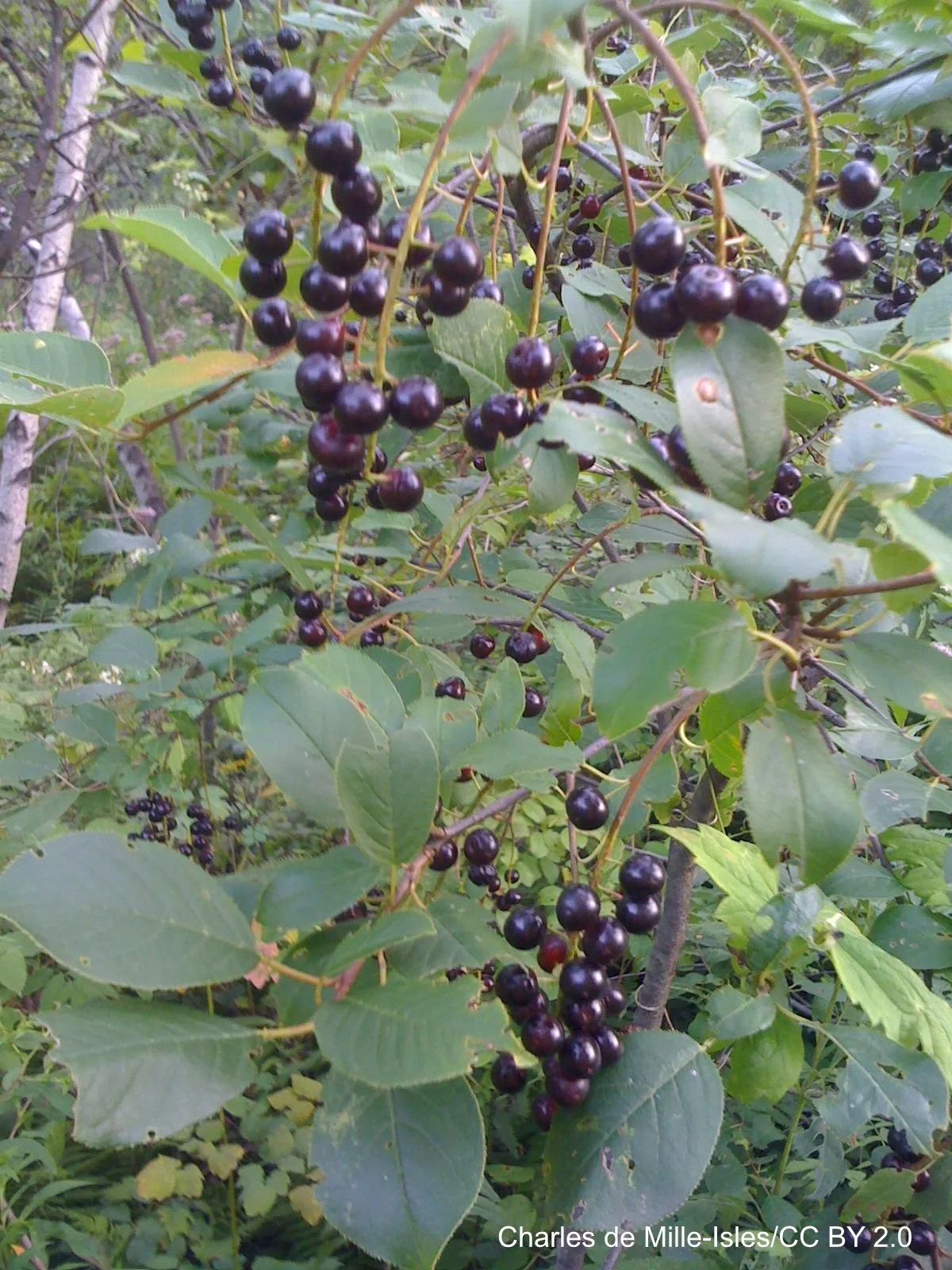
Black chokecherry (Prunus virginiana var. melanocarpa) puts on a striking show across all four seasons — opening spring with long, fragrant clusters of white flowers that attract bees and early pollinators, then transitioning to glossy, deep purple-black berries in late summer that are beloved by birds and can be harvested for jams, jellies, and syrups. Foliage emerges a fresh medium green and turns warm shades of orange and red in fall, while the attractive dark bark adds structure to the winter landscape. It grows 6–15 ft. tall and 6–10 ft. wide.
Naturally adaptable and tough, this plant thrives in a wide range of soils — from rocky hillsides to moist streambanks — and tolerates both drought and occasional flooding once established. It spreads through root suckers to form dense thickets, making it an excellent choice for naturalizing, erosion control, or wildlife habitat plantings. Deer, songbirds, and small mammals all make use of its shelter and fruit. Black chokecherry is a larval host plant to Eastern Tiger Swallowtail (Papilio glaucus).
Note: Leaves, bark, and seeds contain cyanogenic compounds and should not be consumed. Fruit pulp is safe when properly prepared.