Northern Bush Honeysuckle
Northern Bush Honeysuckle
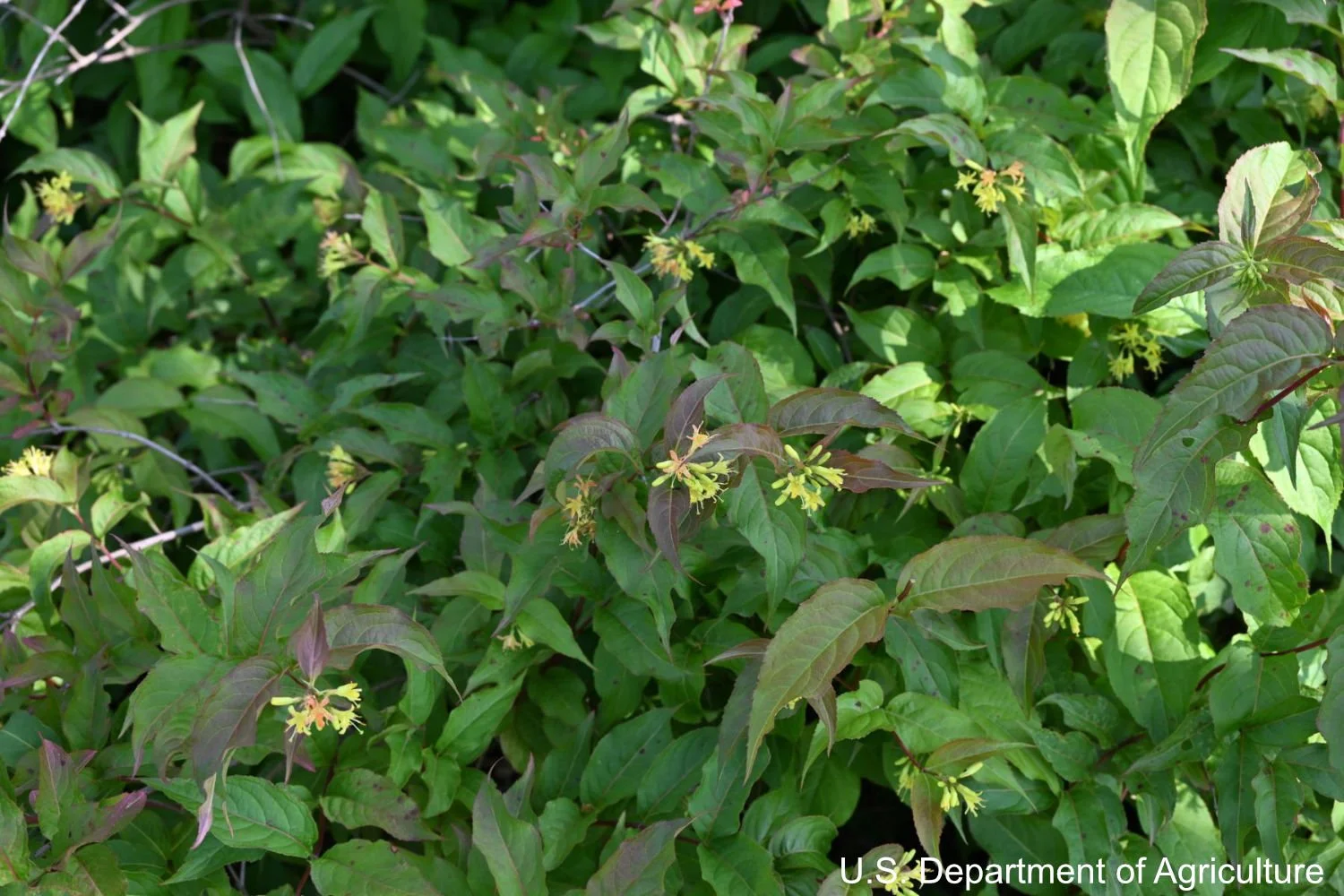
A tough, cheerful, and thoroughly native shrub, northern nush honeysuckle (Diervilla lonicera) is an unsung workhorse of the eastern landscape — capable of thriving where many other plants give up. This densely branched, deciduous shrub typically grows 3 feet tall and up to 4 feet wide. Despite its common name, it is not a true honeysuckle — and unlike the invasive Lonicera species that share the name, this is a well-behaved native that earns a place in any responsible garden.
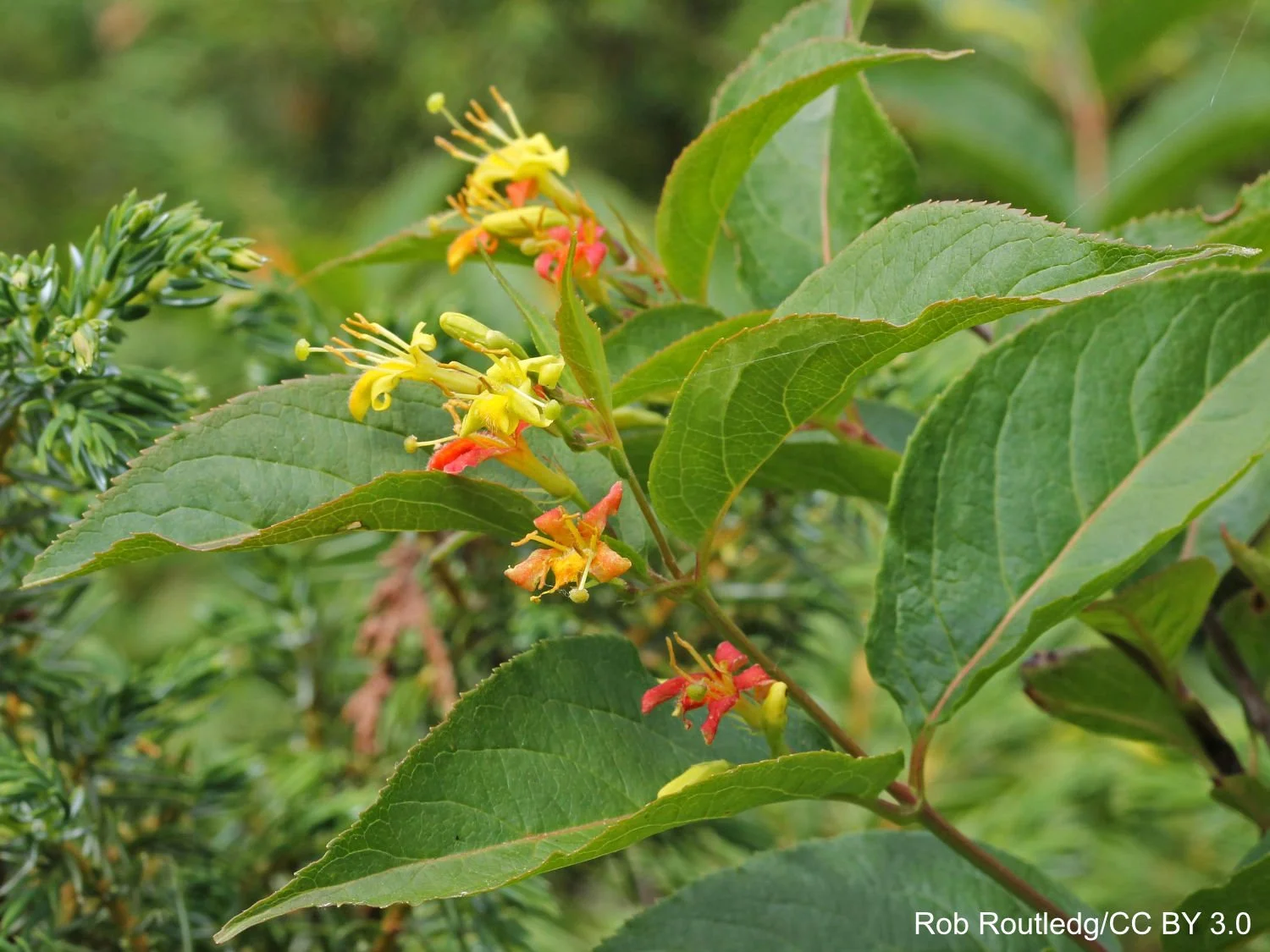
Emerging in spring with coppery bronze new growth, the foliage deepens to rich dark green through summer before shifting to vivid shades of yellow, orange, and red in autumn — a full-season display that few shrubs of its modest size can match. From early to late summer, cheerful yellow trumpet-shaped flowers resembling those of true honeysuckle appear in pairs and trios along the stems, over an extended bloom period. An interesting detail: the flowers remain yellow until pollinated, at which point they turn red.
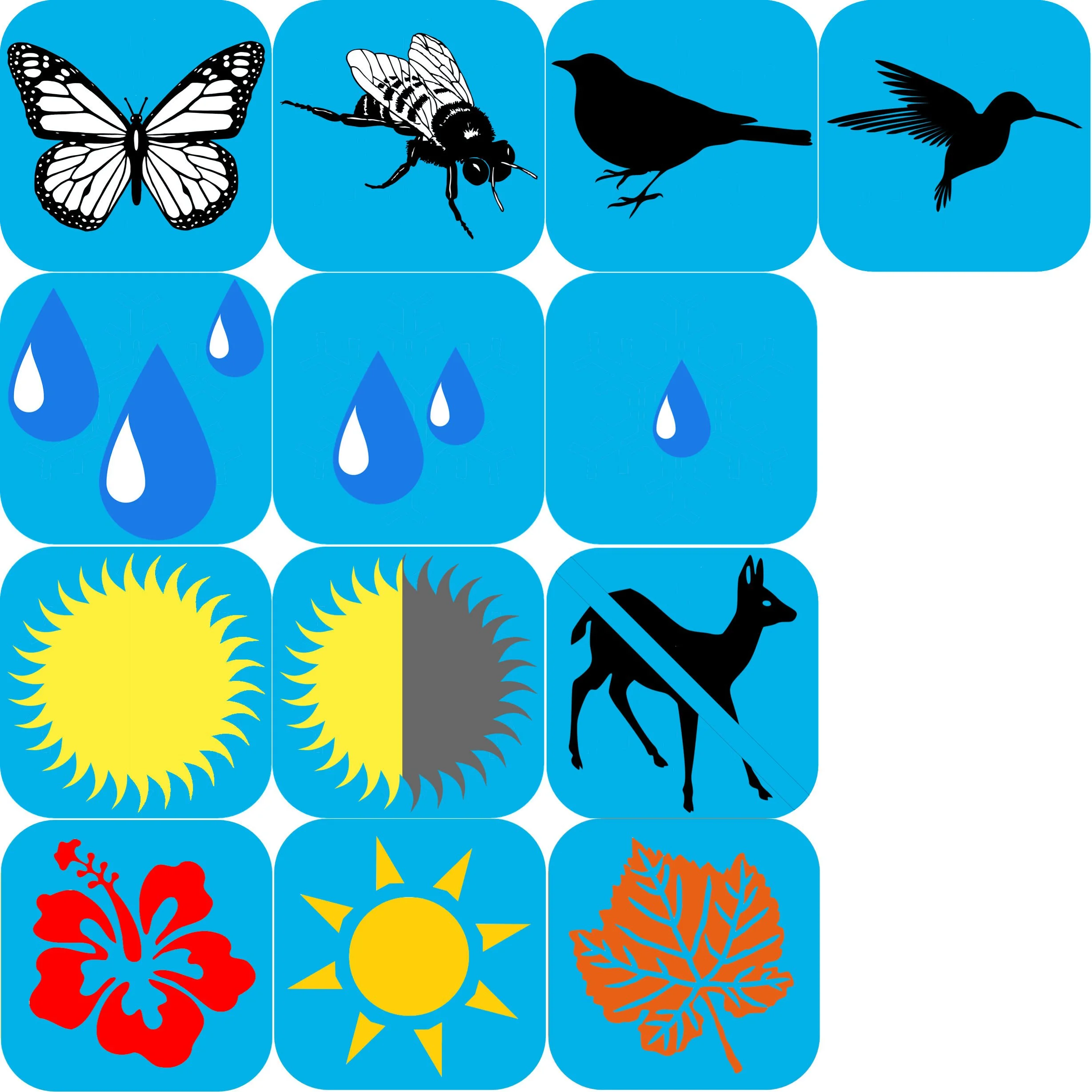
Northern bush honeysuckle holds special value for bumblebees, which are drawn in significant numbers to its long, flexible flowers. It is also the only recorded host plant for the hawkmoth Hemaris aethra, and birds frequently nest among its branches and feed on its fruits. It also serves as a host plant for the Laurel Sphinx moth and the Snowberry Clearwing.
Easily grown in average to dry, well-drained soils in full sun to part shade, it tolerates drought and grows best in cool summer climates. It is equally at home on exposed rocky sites and in open woodland. Its freely suckering habit forms broad thickets over time, making it an excellent candidate for erosion control on slopes and banks, hedgerow plantings, and naturalized woodland gardens.