
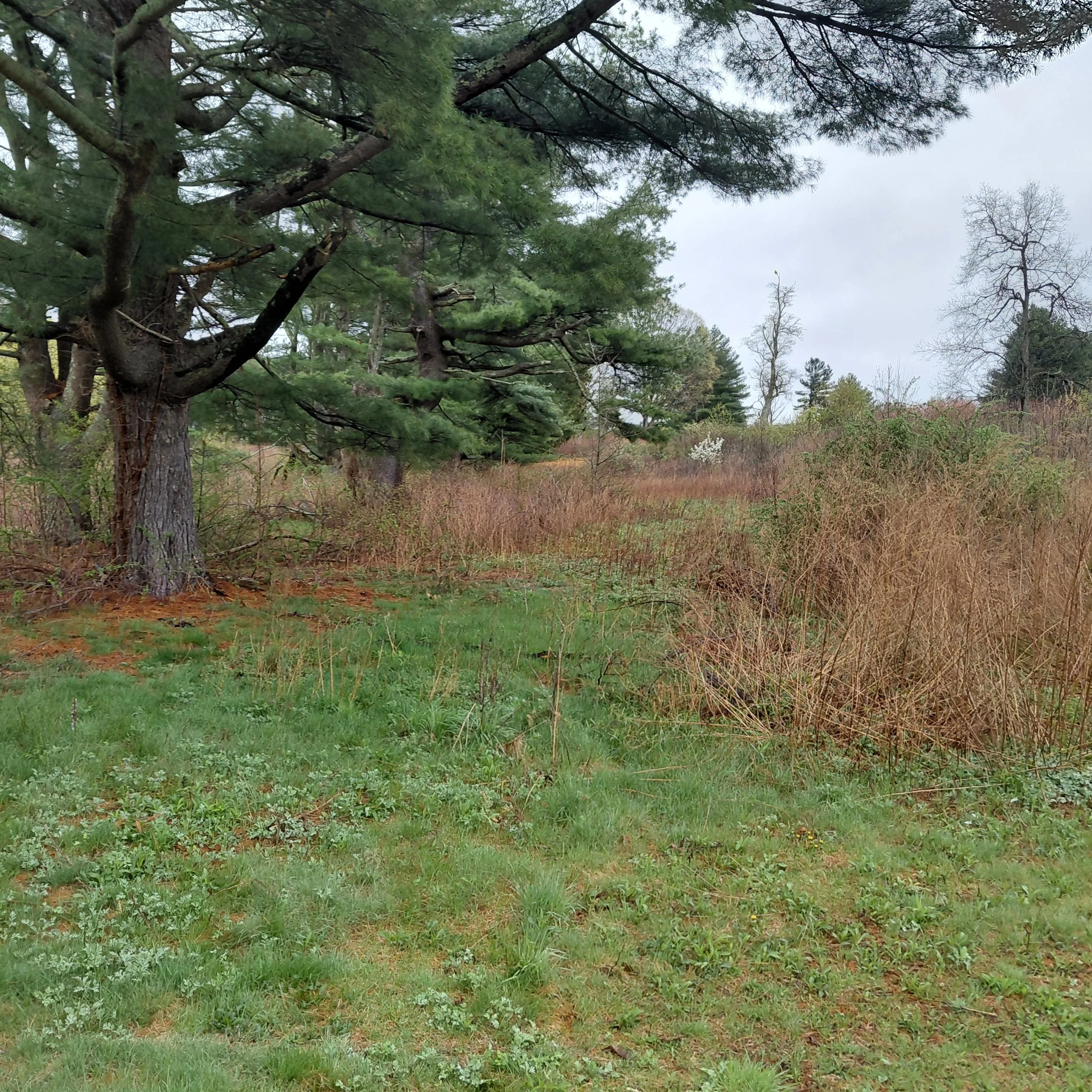
Photo: Ed Bailey.
Since the Woodbridge Country Club closed in 2016, its 155 acres at 50 Woodfield Road have been slowly reverting to wildland. Mowed fairways have become meadow and shrubland, and the ponds and wooded edges have filled in. Birders have observed grassland birds nesting where golfers once played, and the woods now support a variety of tree-nesting species. This spring, the Menunkatuck Audubon Society set out to measure how important this town-owned property is to birds.
A new way to survey birds
Google Maps
Bird surveys usually rely on point counts: an expert stands at a spot for 5–10 minutes and records every bird seen or heard. Point counts are valuable but offer only brief snapshots, and rain, wind, or fog can quiet birds on survey days. So we let the property speak for itself. Around April 19, 2026, we installed four Song Meter Mini 2 recorders (autonomous recording units, or ARUs) spaced roughly 500 meters apart to cover the pond, wetlands, meadow, and forest. The recorders ran until mid-June, capturing the dawn chorus and everything else day after day.
The recordings were analyzed using BirdNET, an artificial intelligence tool developed by the Cornell Lab of Ornithology and Chemnitz University of Technology. BirdNET compares short audio clips against hundreds of thousands of reference recordings to identify the species that are singing.
What we heard
BirdNET identified about 200 species in the recordings, and early results show the property is serving a triple role for birds.
Breeding habitat. Many species sang repeatedly in suitable habitat during the breeding season. Using eBird's breeding codes and the Connecticut Bird Atlas "safe dates," we classified their breeding status as possible or probable. Recordings alone can't confirm nesting, because confirmation requires seeing a bird carry food or build a nest. Several of the species we heard have special conservation status in Connecticut.
Migration stopover. In spring, warblers, vireos, and thrushes on their way to northern and boreal forests stopped here to rest and refuel. The pond also attracted waterbirds passing through.
Species of conservation concern. The recorders recorded two birds on Connecticut's list of protected species: a possible American Bittern, listed as endangered (pending confirmation), and the Brown Thrasher, a species of special concern. They also detected Wood Thrush and Golden-winged Warbler, two declining forest and shrubland birds that the National Audubon Society lists as indicator species. BirdNET flagged a few unexpected species as well, including Blue Grosbeak, Yellow-throated Warbler, and Rusty Blackbird, and we're having people review those recordings before we count them.
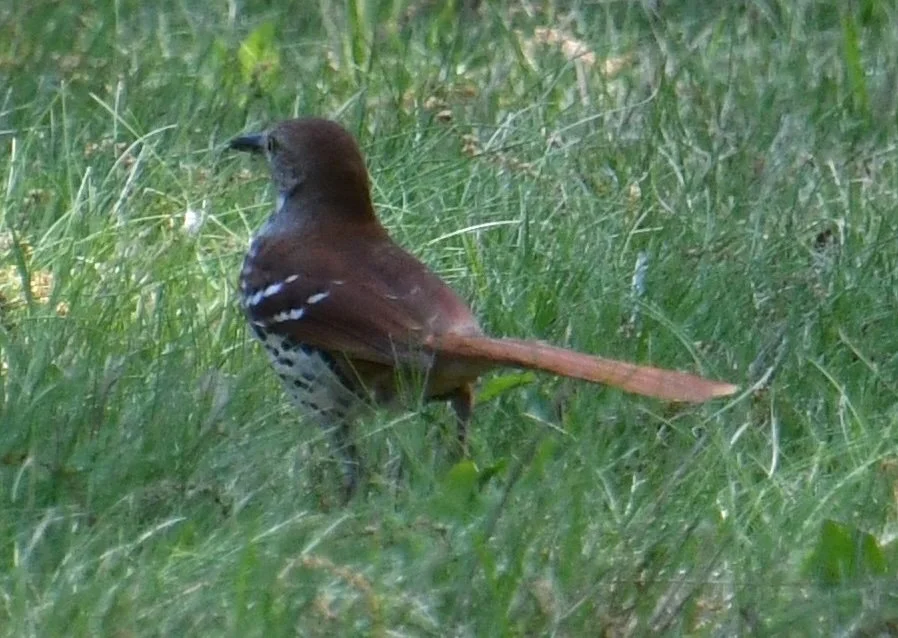
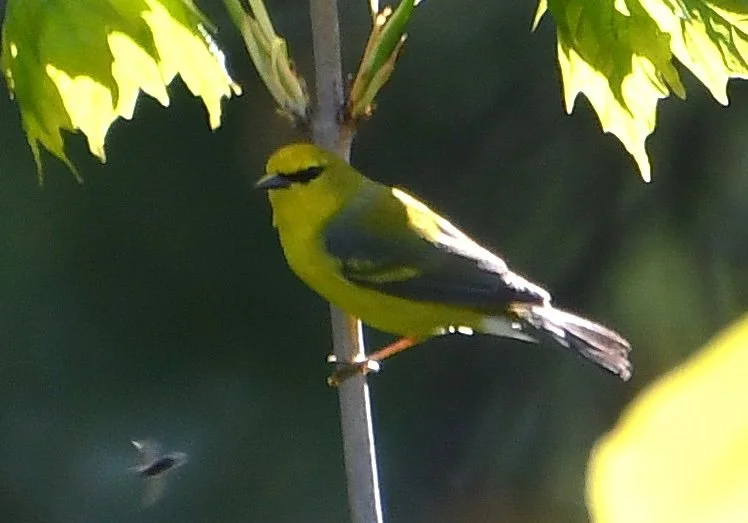
For context, the two Connecticut Bird Atlas blocks that include the property recorded 82 and 83 breeding species during the 2018–2022 Atlas. The Atlas data can't single out the country club, but they show what our recorders are likely to pick up.
What's next
This is a preliminary look at about two months of data. To understand the property's full value, we plan to:
Keep the recorders running for a full year, through fall migration and winter
Have experienced birders verify the unusual detections by listening to the recordings
Send volunteer birders out during the breeding season to confirm nesting by watching for adults carrying food, fledglings, and nests
Our message to Woodbridge: this former golf course has become a rich bird habitat, and it deserves protection as open space.
Thanks to the Town of Woodbridge for permission to conduct this study, to Ed Bailey and Steve Burstein for installing and maintaining the recorders, and to the Menunkatuck Audubon Society members whose donations purchased them.