Conservation

Motus Stations: Tracking Continental Migration

Each year, billions of birds undertake incredible journeys—some traveling thousands of miles from their breeding grounds to wintering sites and back again. These migrations are among the most remarkable phenomena in nature, but they are also among the most vulnerable. Along the way, birds face numerous challenges: shrinking stopover habitats, storms, predators, collisions with buildings and towers, and the increasing effects of climate change.

If we are to protect these species, we must first understand their migration patterns, destinations, and survival needs. That’s where the Motus Wildlife Tracking System comes into play.

The Motus Wildlife Tracking System has revolutionized the study of bird migration by using tiny radio transmitters, or nanotags, to track individual birds as they move across a network of receiving towers.

Motus (“movement” in Latin) is an international collaborative wildlife tracking network built to track migration and movements of birds, bats, and even large insects using automated radio telemetry.

Motus locations. Photo: motus.org

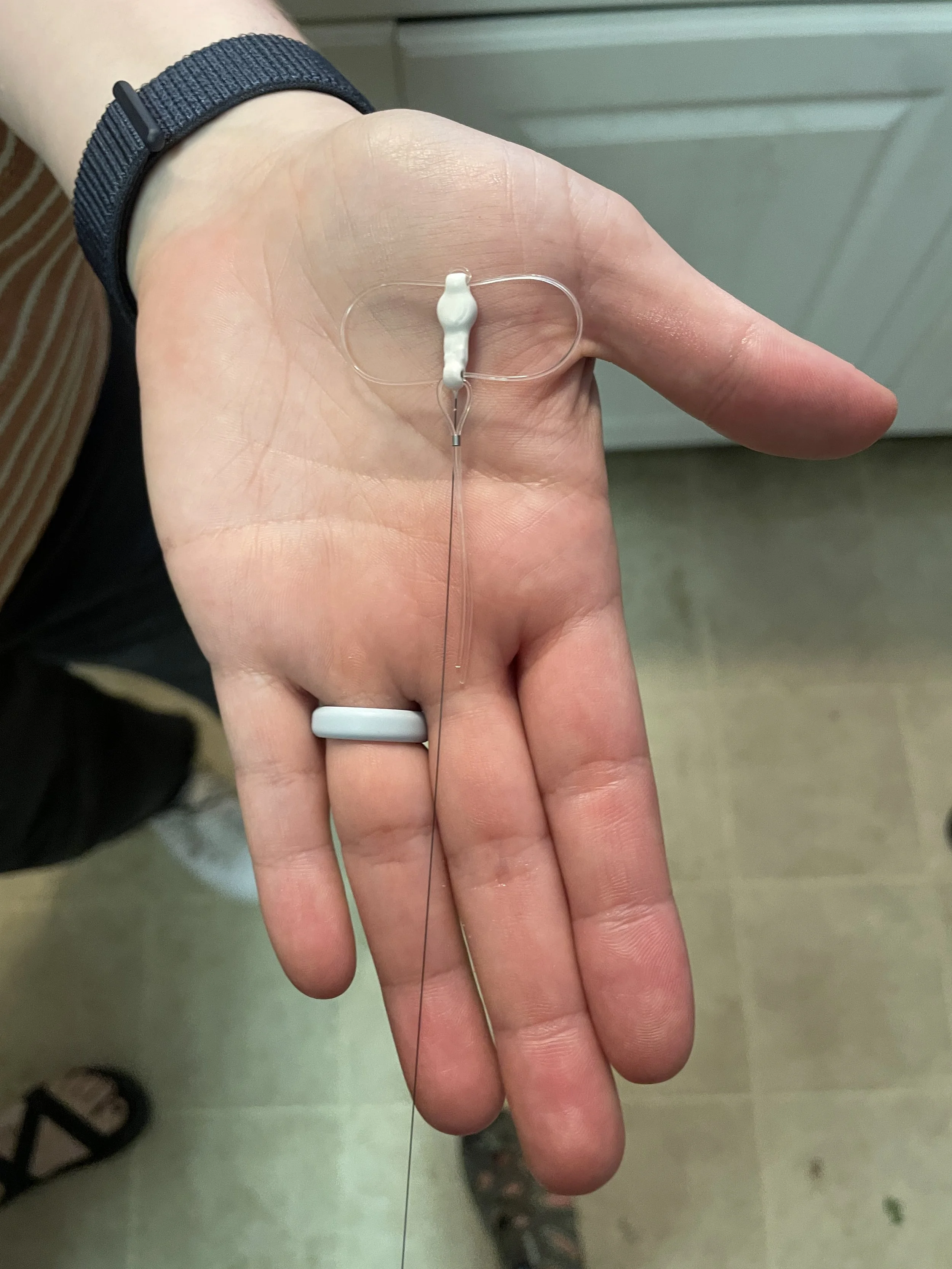
Motus nanontag: Sharon Audubon Center

Nanotags are very small, lightweight radio transmitters that emit a uniquely identifiable radio signal (“ping”) periodically. Because they are lightweight, they can be put on small animals,  including small songbirds.

Motus nanotags are designed with bird safety in mind, but like any tracking device, they pose some risks. Researchers follow strict ethical and technical guidelines to minimize harm, and in most cases, the risks are very low compared to the scientific benefits of the data collected.

Motus tower at the Sound School in New Haven: Bill DeLuca?Audubon

Motus towers are ground-based receiving stations with antennas tuned to  detect signals from nanotags when a tagged animal flies within range, typically about 15 km (9 miles).

When a tagged animal passes near a tower, the tower detects the tag ID and time of detection. The data are uploaded to the Motus database, where researchers from many organizations can access them.

Audubon and its chapters and partners have adopted Motus and nanotag tracking to better understand migration in ways that were previously impossible.

Audubon teams use nanotags on particular species of concern — ones that are declining or whose migration behavior is poorly understood, for example, the American Kestrel and songbirds like the Wood Thrush and Chimney Swift.

Information from detections at various towers helps us understand migration timing (when birds leave/arrive), stopover behavior (where they rest and refuel), and routes (which paths individuals take).

By inserting towers in areas that were poorly covered before, Audubon is helping close geographical gaps in the migration tracking network (interior areas, flyways, stopover habitats). This allows us to identify where habitats are utilized by migratory birds and where habitat protection or restoration would have the most significant impact.

Data is used to create interactive maps, such as the Bird Migration Explorer, allowing the public, policymakers, and conservation planners to visualize patterns.

Unlike banding, where you often need to recapture a bird (which may never happen), or geolocators that only store data until recovery, nanotags and towers enable automatic detection of movements.

There are limitations to the Motus tower data. There remain areas without receiving towers, so tagged animals flying through those regions might not be detected. Nanotags are another limiting factor with battery life and tag range being technical constraints. One of the biggest challenges for Motus is that only a small fraction of the billions of migrating birds are ever tagged. Tagging more birds would improve the Motus network's power, accuracy, and usefulness for conservation. Each bird with a nanotag not only helps protect its own species but also supports millions of other migrants sharing the skies.

Migration is risky, with many birds dying along the way. However, a nanotag on a bird that dies during migration can still provide highly valuable information—sometimes even more than one that completes its journey. Here’s the kind of valuable data researchers can gather:

  • If a tag signal stops moving but keeps transmitting from the same location, researchers can roughly identify where the bird died. Mapping these spots across many individuals can reveal “danger zones” along migration routes, such as areas with high collision risk or regions with habitat loss where birds are unable to refuel.

  • The moment a tag stops moving can show when a bird died—during departure, en route, or near its destination. Early losses might signal breeding-ground threats. Mid-migration deaths often indicate weather-related issues, exhaustion, or a lack of suitable stopover habitat. Late-stage losses may be related to wintering habitat conditions.

Every nanotagged bird, even one that doesn’t survive, becomes a messenger. Its final signal tells scientists where migration is breaking down—and that knowledge is precisely what’s needed to make migration safer for future generations.

Menunkatuck Motus Station at the Sound School

A year ago, Menunkatuck and Audubon installed a Motus tower at the Sound School in New Haven.

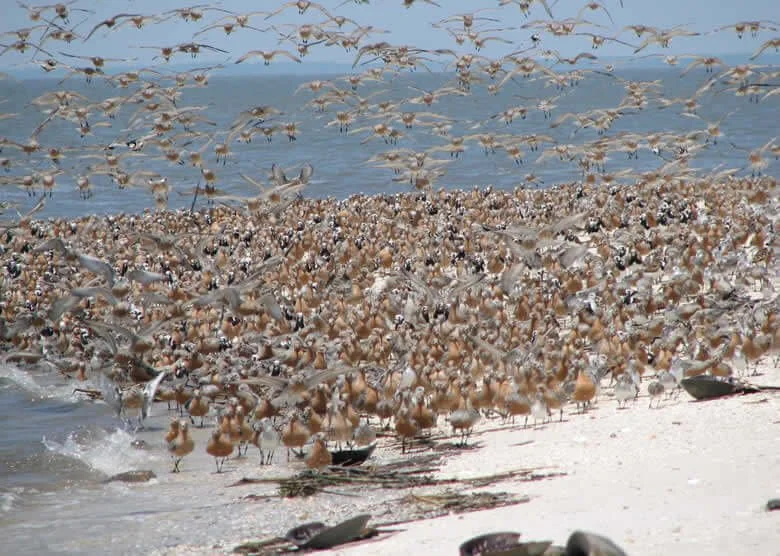
Short-billed Dowitcher

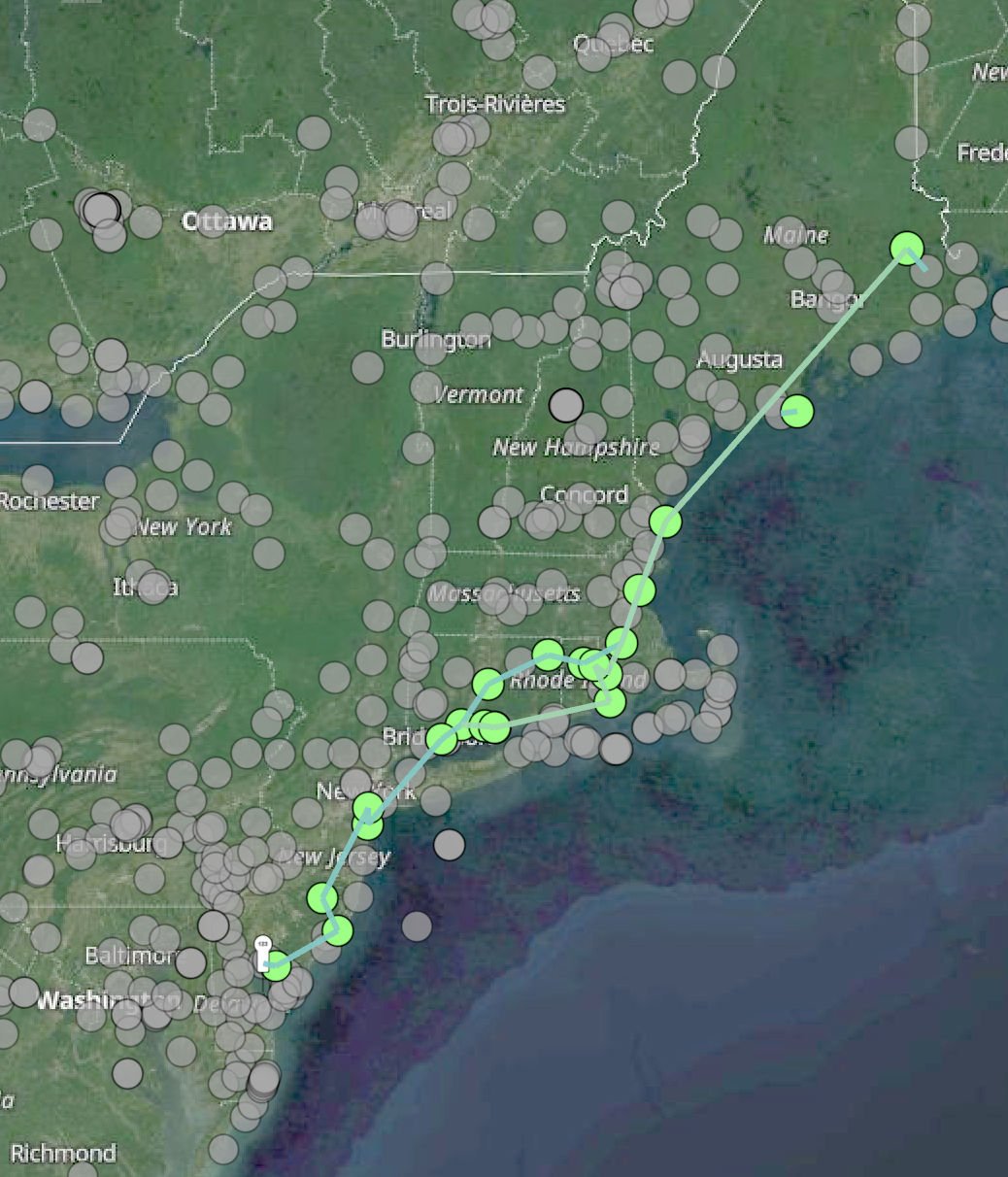
Over the past year, the Menunkatuck tower has been pinged by several migrating birds. A Short-billed Dowitcher, which was captured and tagged at a stopover site in Delaware Bay on May 17, flew past New Haven Harbor on May 30. It continued north to its breeding ground in the coastal regions of the Canadian Arctic, where the boreal forest meets the tundra. Short-billed Dowitchers have a three-week incubation period, and shortly after the eggs hatch, the females depart to begin their southward migration. The bird that pinged New Haven in May pinged again on July 10 before continuing its journey south.

Chimney Swift

Chimney Swift with nanotag: Sharon Audubon Center

The Sharon Audubon Wildlife Rehabilitation Center treats hundreds of sick, injured, and orphaned birds and other wildlife each year. This year, the center rehabilitated 20 Chimney Swifts. Before they fledged, they were equipped with Motus nanotags as part of a project to track 20 rehabilitated Chimney Swifts from Sharon Audubon Center. The project aims to address two main goals: (1) improve our understanding of swift movements outside of the breeding season, and (2)  evaluate the effectiveness of swift rehabilitation efforts by estimating seasonal survival.

On August 30, one of the swifts pinged the New Haven tower. It spent a day in the area and left on August 31 to continue south and was next recorded at the Natural Lands Gwynedd Preserve outside Philadelphia.

Other birds that have pinged the Menunkatuck tower include an American Woodcock, an American Kestrel, an Eastern Whip-poor-will, two other  Short-billed Dowitchers, two Ovenbirds, and another Chimney Swift.


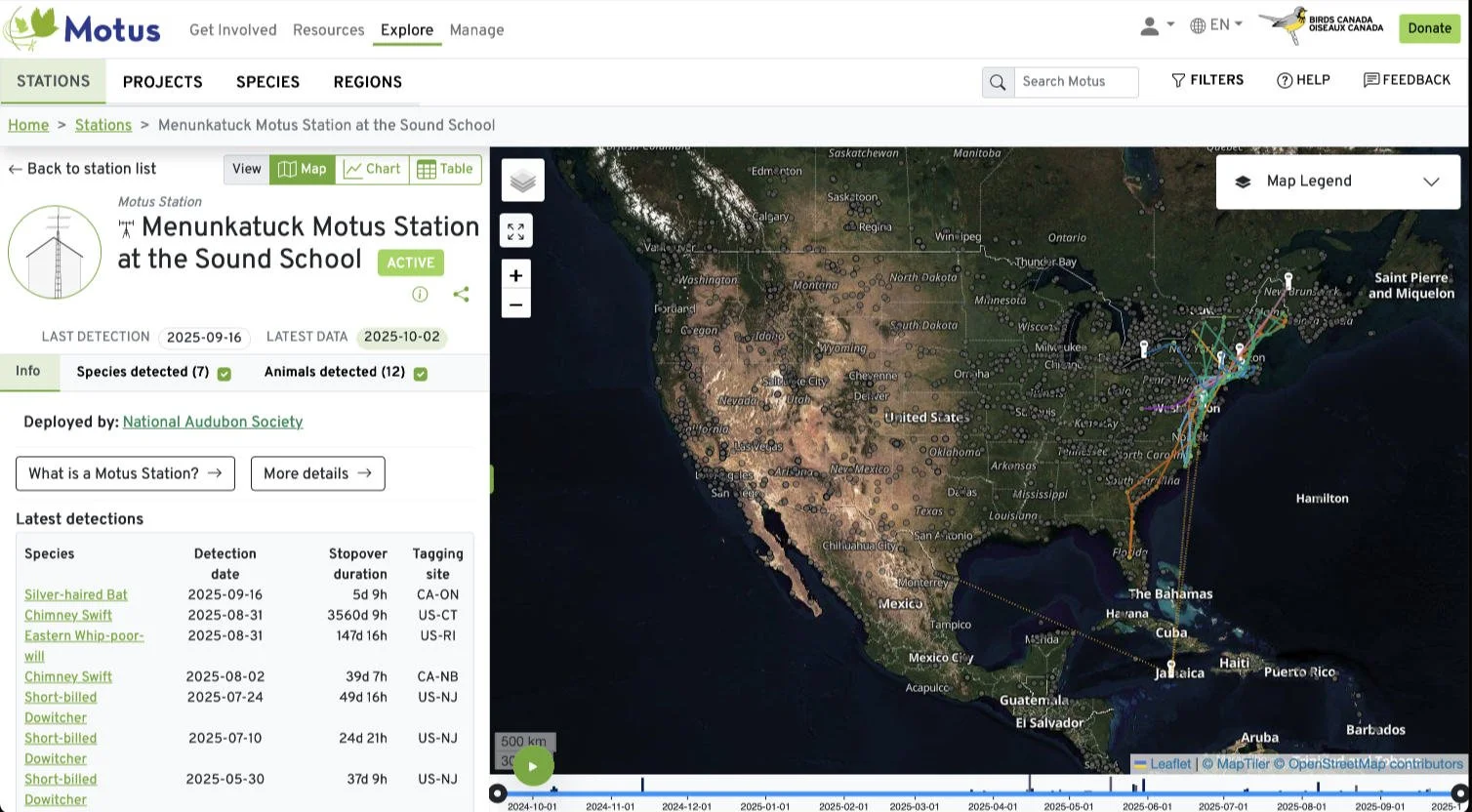
How to view the Menunkatuck Motus Station at the Sound School

Go to motus.org/dashboard/#e=profile&d=stations&s=14168.

Once on our station's page, you can scroll down to see all the birds that have passed by our tower. Birds only need to fly within 9 miles of the tower to be detected and appear on our station page. You can view specific details about each of these birds, including the date and location of their tagging and how many Motus towers they've flown past.

Menunkatuck Annual Report 2022

After two years of Covid restrictions and limitations, Menunkatuck Audubon Society expanded some activities and had significant accomplishments. The chapter territory expanded to by adding Ansonia, Derby, and Seymour. 

Conservation 

Photo:Robin Ladouceur

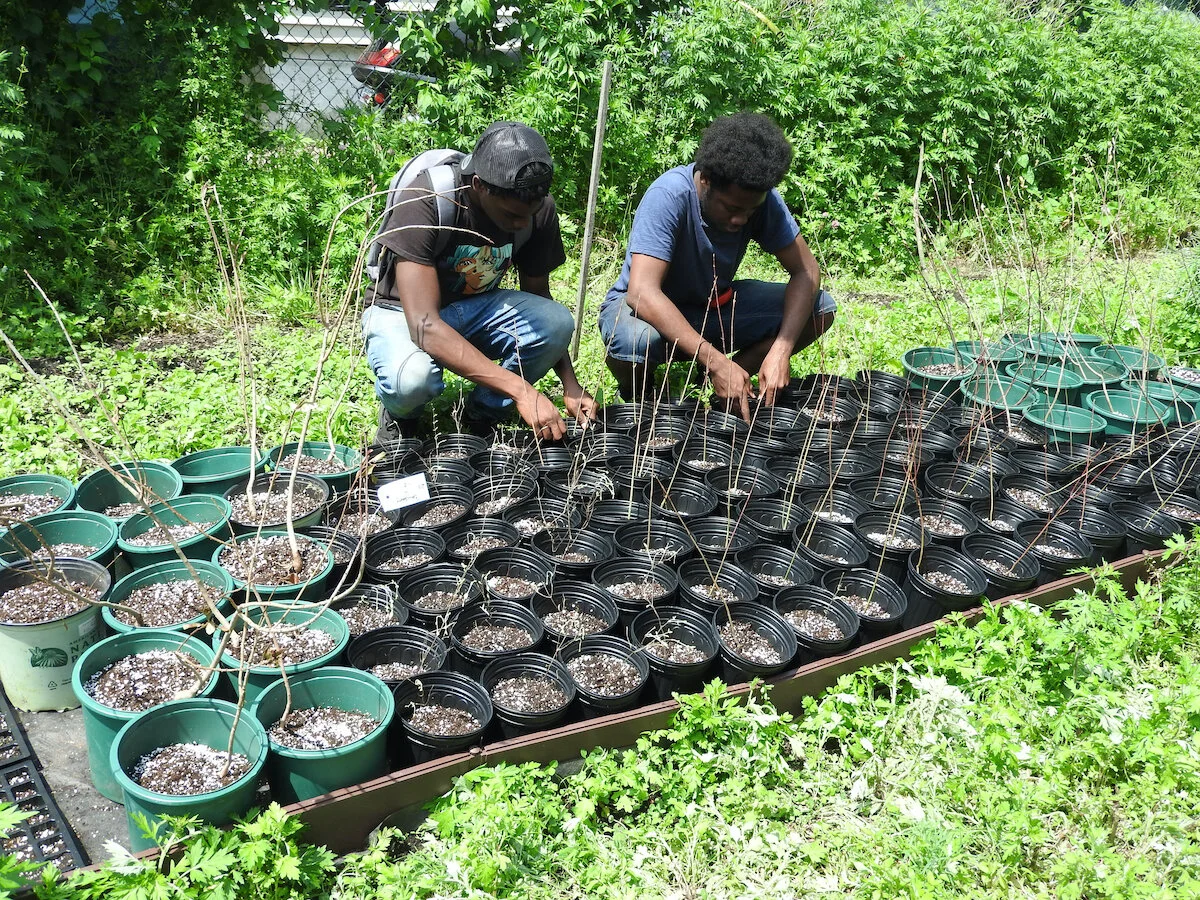
Menunkatuck’s UrbanScapes Native Plant Nursery in the Newhallville neighborhood of New Haven is a partnership with Community Placemaking Engagement Network, a neighborhood community action group. We worked with seven neighborhood teens and adults growing 3000 native perennials and shrubs. We planted many in neighborhood gardens and sold others. In partnership with Highstead, we had five native plant workshops at the nursery.

Terry Shaw’s crew continued to install and replace Osprey platforms along Connecticut’s shore. 

Menunkatuck is partnering with the Connecticut Ornithological Association and other conservation organizations in Lights Out! Connecticut, a project to help birds reach their destinations safely by reducing skyglow over our cities.

The Purple Martin colonies at Hammonasset and the Guilford Salt Meadow Sanctuary fledged almost 500 young with half from Guilford. Tree Swallow nest boxes at Hammonasset, the Ox Pasture Preserve, Guilford Salt Meadow Sanctuary, and West River Memorial Park fledged 300 young birds. Neither Purple Martin Gourds at the Ewen Farm Preserve in Orange nor West River Memorial Park in New Haven have been colonized yet.

Community Science

The East River Marsh Migration Survey grew to the point where we were able to incorporate it as a separate entity, the East River Watershed Research Institute with additional studies including water quality monitoring.

After canceling the 2020 Christmas Bird Count because of Covid, Menunkatuck had teams scouring the Guilford-Long Island Sound count circle contributing to Audubon’s 122 year old bird survey. .

Advocacy

As part of the Connecticut Forage Fish Alliance, Menunkatuck continued our education and advocacy campaign to save our seabirds from the extinction crisis facing them and advocating for the Forage Fish Conservation Act. Some minor gains were made. The Connecticut State Legislature passed a bill to protect forage fish in the state. A ban on taking of horseshoe crabs except for research and bleeding passed the State House but not the Senate. Other bills concerning balloons, rodenticides, and lights out failed to gain traction. We provided testimony regarding siting offshore wind turbines in the waters off Massachusetts and Rhode Island.

Outreach

Before the pandemic Menunkatuck tabled at 8-10 events each year. This year we were able to get back to six events where we publicized our conservation and education activities.

Education

We offered 17 Zoom and in-person programs with an average audience of about 40 people and speakers and attendees from throughout the country.

We continued to stream video from our nest cameras in New Haven, at Hammonasset Beach State Park, and on Falkner Island.

Volunteers & Funding

We had 90 people who donated 1600 person-hours of volunteer time. They installed Osprey platforms, monitored nest boxes, conducted the marsh migration survey, worked at UrbanScapes, and performed other activities. Their volunteer time was worth more than $56,000.

Your contributions to Menunkatuck were leveraged into grants and gifts totaling more than $9,000. We were also the fiscal agent for a $19,200 Guilford Foundation grant to the East River Watershed  Research Institute.

Motos towers are used to track wildlife.

In addition to maintaining our current projects, during 2023 we plan to use the greenhouse at the Urbanscapes Native Plant Nursery to propagate Spartina altiniflora for salt marsh restoration, establish new native plant demonstration gardens, install a Motus tower in the New Harbor area, and distribute nature backpacks to local libraries for loan to patrons.

Menunkatuck is an all-volunteer organization with no paid staff. The majority of our programs and field trips are free, and any fee we charge is simply to cover the expenses of a program.

Menunkatuck Audubon Society Accomplishments for 2021

As COVDI-19 restrictions eased, Menunkatuck Audubon Society was able to engage in some activities and make significant accomplishments.

Conservation

Menunkatuck’s UrbanScapes Native Plant Nursery in the Newhallville neighborhood of New Haven is a partnership with Community Placemaking Engagement Network, a neighborhood community action group. We worked with seven neighborhood teens and adults growing 2000 native perennials and shrubs. We planted many in neighborhood gardens and sold others. Thanks to your generosity at last year’s Annual Appeal, we purchased a greenhouse that we will use to get an earlier start on growing plants next spring. UrbanScapes was one of three chapter projects featured during Audubon’s Virtual Convention last summer. 

Terry Shaw’s crew installed more than 10 new and replacement Osprey platforms along Connecticut’s shore. 

Menunkatuck is partnering with the Connecticut Ornithological Association and the Yale Divinity School in Lights Out! New Haven, a project to help birds reach their destinations safely by reducing skyglow over the city.

The Purple Martin colonies at Hammonasset and the Guilford Salt Meadow Sanctuary with 165 fledglings, Tree Swallow nest boxes at Hammonasset, the Ox Pasture Preserve, Guilford Salt Meadow Sanctuary, and West River Memorial Park. We fledged 305 young birds, and Eastern Bluebird nest boxes at the Guilford Salt Meadow Sanctuary and had 14 Eastern Bluebirds fledge. Neither Purple Martin Gourds at the Ewen Farm Preserve in Orange nor West River Memorial Park in New Haven have been colonized yet.

Community Science

COVID-19 prevented us from participating in the 2020 Christmas Bird Count in December.

With the diminishing of the pandemic in late spring and fall, we were able to conduct the East River Marsh Migration Survey with 50 volunteers from our members and friends as well as UConn Researchers and students from Southern Connecticut State University.


Advocacy

As part of the Connecticut Forage Fish Alliance, we continued our education and advocacy campaign to save our seabirds from the extinction crisis facing them, advocating for the Forage Fish Conservation Act. We provided testimony regarding siting offshore wind turbines in the waters off Massachusetts and Rhode Island.

Outreach

Mayor Elicker cut the ribbon at the greenhouse.

For the past several years we have been tabling at 8-10 events each year. This year we were only able to do two events, the Orange Country Fair and our Greenhouse Opening celebration at which New Haven Mayor Justin Elicker cut the ribbon.

Education

We offered 21 Zoom programs with an average audience of about 40 people and speakers and attendees from as far away as Australia.

Our streaming video from our nest cameras in New Haven, at Hammonasset Beach State Park, and on Falkner Island continued.

Volunteers & Funding

Amazingly in these difficult times, we had 110 people who donated 2500 person-hours of volunteer time. Working in small groups with all the recommended precautions, they installed Osprey platforms, monitored nest boxes, conducted the marsh migration survey, worked at UrbanScapes, and performed other activities. Their volunteer time was worth more than $70,000.

We were successful in leveraging your contributions into grants and gifts totaling more than $3,000.

In addition to maintaining our current projects including the Osprey platform replacements, nest box monitoring, and streaming nest cam video, during 2022 we plan to use the greenhouse at the Urbanscapes Native Plant Nursery to propagate native plants from seeds, complete nest box trails in Orange, Woodbridge, and North Branford, install a new native plant demonstration garden, expand the East River Marsh Migration Survey, and initiate climate solutions.

Menunkatuck is an all-volunteer organization with no paid staff. The majority of our programs and field trips are free, and any fee we charge is simply to cover the expenses of a program. Members and friends like you play a vital role in supporting our local chapter. With your help, Menunkatuck will continue to serve as the local birding group, environmental educator, and conservation advocate. As always, we welcome your volunteer assistance on any of our projects. 

 Best wishes for a happy holiday season and a better 2022 for us all.

Dennis Riordan, President 

Photos: Robin Ladouceur

Menunkatuck Audubon Society Accomplishments for 2020

Menunkatuck Audubon Society Accomplishments for 2020

As for most of the world, 2020 did not go as planned for Menunkatuck Audubon Society. However, the challenges imposed by the corona virus became opportunities and we were able to have some significant accomplishments.

Native Plant Sale

Native Plant Sale

Urbanscapes Native Plants Nursery, a partnership between Menunkatuck Audubon Society and CPEN, is New Haven’s first Urban Native Plant Nursery. Funding came from an Audubon in Action Grant. Gather New Haven and the City of New Haven supported the project by giving permission to use two vacant lots in Newhallville. The Darien and Norwalk Pollinator Pathways helped us by designing four 12’x4’ raised beds and raising money for materials.

New Haven youth are growing 650 native plants

New Haven youth are growing 650 native plants

Menunkatuck applied for and was awarded a $8,130 grant to start a native plant nursery in New Haven. Our partner in the project is the Community Placemaking and Engagement Network (CPEN) which works with young people to engage them in the productive use of public spaces and vacant lots. The project was to be located in Newhallville, an underserved neighborhood of New Haven. We were planning to start working the week after COVID-19 shut down Connecticut. Needless to say, we put everything on pause.

Bin Building Party

Bin Building Party

What's a Bin Building Party, you might ask? Good question! It's when concerned citizens and nature lovers - birders, anglers, plastic clean-up and wildlife enthusiasts - get together to help a coalition of Connecticut organizations build Monofilament Fishing Line Recycling Bins that will be deployed around the Greater New Haven Area in order to help protect and conserve bird and wildlife populations.